

Iide Shishi Festival

rom June to September each year, the festival has been held for over 300 years at shrines throughout the town as a traditional form of rural culture, offering prayers for abundant harvests of the five grains and good health.
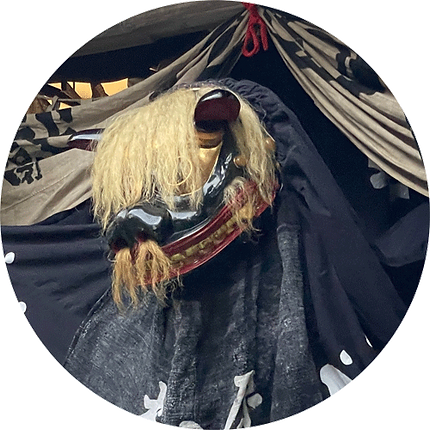
The lion dances passed down at each shrine are carefully preserved and handed down to future generations.
The origin of the Iide Shishi Festival comes from performances in which young people of the village form a long, centipede-like lion dance (mukade-jishi) that moves wildly, as well as displays of strength contests performed by the strongest man in the village.
Among these events, the Hagyu Suwa Shrine Mikoshi Procession is the largest in the region, featuring a procession of approximately 200 participants, and is designated as an Intangible Cultural Property of the town.
The lion heads used in the lion dances take about five years to complete and are entirely hand-carved without preliminary sketches.
In recent years, young woodcarvers have also become active, and an increasing number of households display lion heads in their homes as protective talismans to ward off evil.
Shrine Introduction

Tsubaki Area
Kumano Shrine
Second Saturday of June
Tsubonuma, Kurosawa Area
Kumano Shrine
Mid-July


Naka Area
Toyonaka Inari Shrine
Mid-July

Soegawa Area
Kumano shrine
Mid-July


Hagyu Area
Yamanokami Shrine
Third Sunday of July
Shimotsubaki, Tsubaki Area
Zasu Shrine
Last Saturday of July


Nakanome, Hagyu Area
Hachiman Shrine
First Saturday of August
Matsubara Area
Hachiman Shrine
August 15

Hagyu Area
Suwa Shirne
August 16
(Spring Festival) Late April
Kojirakawa Area
Kojirakawa Shirne
August 16


Kurosawa Area
Hachiman Shrine
August 16
Tsubaki Area
Wakanuma Shirne
Mid - August


Nakanome, Hagyu Area
sukioka Inari Shrine Children’s Festival
Mid-August
Kurosawa Area
Inari Shrine
Late August


Tenoko Area
Hachiman Shrine
Mid-September
Naka Area
Wakamiya Hachiman Shrine
Mid-September
(Spring Festival) Early May (Golden Week)
